Witches Coven Cross Stitch Pattern PDF
First Impression: Bold, Mystical, and Instantly Recognizable
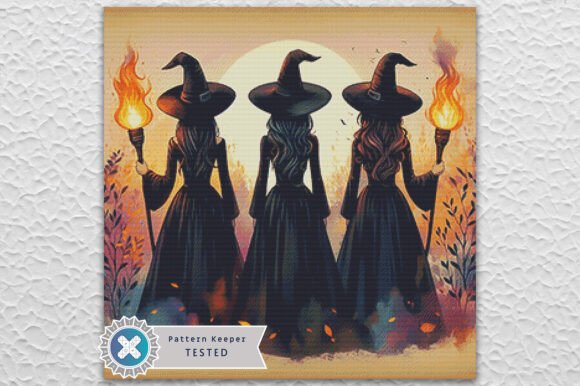
As an embroidery designer who’s curated over 200 craft fair booths—from Portland bazaars to Brooklyn maker markets—I opened the Witches Coven Cross Stitch Pattern PDF expecting theatrical charm. What I got was stronger: a full-coverage, tightly composed motif that reads as both ancient and Instagram-ready. It’s not cute witchcraft—it’s confident, detailed, and unapologetically rich in symbolism. The title alone signals niche appeal, but the execution delivers premium handmade energy: think velvet pouches, linen tea towels, and limited-run embroidered caps—not Halloween novelties, but year-round spiritual lifestyle pieces.
Where It Shines on Craft Fair Products
The Witches Coven Cross Stitch Pattern PDF thrives where detail meets intention. On a 14-count Aida tote bag (21.5″ × 21.5″ finished), it anchors the entire piece—no need for filler motifs. Customers pause mid-aisle because the density of symbols (cauldrons, moons, herbs, sigils) invites slow looking. As an apron embroidery, it works best centered across the chest panel—not tucked in a corner—where its 300 × 300 stitch footprint commands presence without overwhelming utility.
For tea towel embroidery? Yes—but only on smooth, medium-weight cotton or linen blends. Avoid heavily textured toweling; tiny thread loops and fine stems will vanish in the pile. As a pillow cover centerpiece, it elevates a neutral sofa with quiet authority. And as an embroidered patch? Trim carefully and back with iron-on stabilizer—the 60 DMC colors mean high contrast, but also tight transitions that fray easily if cut too close.
What Sells—and What Slows You Down
This isn’t a quick-stitch design. Its strength is in perceived value: customers pay more for “advanced” cross stitch patterns because they signal craftsmanship, time investment, and collectible appeal. That makes the Witches Coven Cross Stitch Pattern PDF ideal for giftable handmade items—especially when paired with matching stitch kits or printed care cards.
But be realistic: dense stitch areas demand consistent tension and excellent lighting. Tiny lettering (like coven names or herb labels embedded in the chart) won’t resolve cleanly on dark fabric or curved cap surfaces. If you’re planning machine embroidery adaptations, remember this is a cross stitch pattern, not a digitized embroidery file—converting requires redrawing paths, adjusting underlay, and testing fill densities.
Photography, Mockups, and Online Conversion
The Witches Coven Cross Stitch Pattern PDF photographs exceptionally well—especially flat-laid on matte black or deep indigo fabric. Its symmetry and balanced negative space make printable mockups pop on Etsy listings. Use natural light, include a hand holding a finished hoop, and add one lifestyle shot (e.g., the stitched design on a folded linen tea towel beside dried lavender). Avoid cluttered backgrounds—the design carries its own narrative.
For digital sellers: bundle the PDF with a 1-page “Stitcher’s Notes” (fabric recommendations, color substitutions, framing tips) to reduce support queries and increase perceived value. This isn’t just another Cross Stitch Patterns download—it’s a mood, a ritual, a story stitched in thread.
Booth Strategy & Visual Impact
At a crowded craft fair, your table needs hierarchy. Hang one large framed sample (16-count, 18.8″ square) at eye level. Below it, display three tactile variations: a small embroidered patch on a denim pouch, a mini version (stitched on 28-count linen, ~7″ square) mounted on cork, and a raw hoop showing thread winding and backstitch anchoring. This shows range *and* reassures buyers the complexity is achievable.
The Witches Coven Cross Stitch Pattern PDF strengthens booth cohesion—if your brand leans into mystic minimalism, earthy apothecary, or slow-craft aesthetics, this design becomes a signature anchor. It doesn’t compete with florals or typography; it complements them as a bold counterpoint.
Production Notes Every Designer Must Check
- Test first on scrap fabric: Especially with dark or textured weaves—contrast shifts dramatically under booth lighting.
- Review spacing between symbols: Tight clusters (e.g., overlapping pentacles) may bleed on loosely woven fabrics—add 1–2 stitch gaps if adapting for machine embroidery.
- Confirm hoop size compatibility: At 300 × 300 stitches, even 16-count requires a 10″+ hoop for comfortable stitching—mention this in your product description for Etsy sellers.
- Inspect stitch density zones: Areas with >4 colors per 5×5 grid need extra stabilizer in commercial embroidery or backing in hand-stitched patches.
- Use the right stabilizer: Tear-away for smooth linens; cut-away for stretchy or fuzzy fabrics like terry cloth or fleece.
- Create at least one real mockup: Not digital—actual thread on actual fabric. Lighting, drape, and scale change everything.
- Compare fabric colors side-by-side: DMC 310 (dark plum) looks royal on ivory but muddy on charcoal—adjust palettes before batch production.
- Confirm commercial licensing: This Graphics file is for personal and small shop use—verify terms before selling finished embroidered goods wholesale or on consignment.
Final Verdict: A High-Value Craft Fair Anchor
The Witches Coven Cross Stitch Pattern PDF isn’t background decor—it’s conversation starter, collector’s item, and booth magnet rolled into one. It performs strongest on products where craftsmanship is visible and touchable: tea towel sets, limited-run pouches, framed wall art, and embroidered gifts with soul. It’s not for rushed production runs or low-contrast fabric combos—but for makers who curate intentionally, sell stories, and value depth over speed, it’s a standout craft fair product with lasting shelf life. Just remember: respect its complexity, honor its symbolism, and let the thread do the talking.