Rose Flower Embroidery Design
A Designer’s First Look: Charm, Detail, and Emotional Resonance
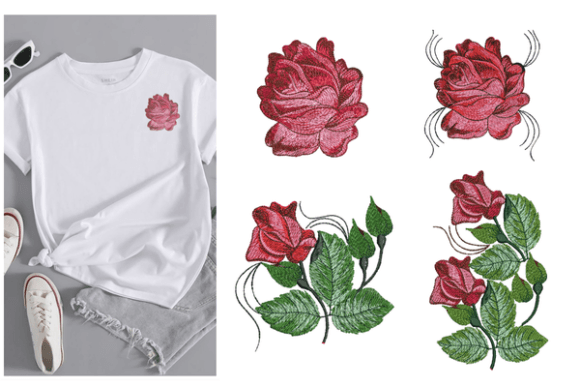
As an embroidery designer who’s developed hundreds of patterns for personalized gift shops and Etsy sellers, my first impression of the Rose Flower Embroidery Design was immediate and warm—it feels like holding a pressed flower in your palm: delicate, timeless, and quietly meaningful. This isn’t a bold, graphic rose—it’s a soft, layered bloom with gentle petal curves, subtle veining hints, and a slight asymmetry that whispers “hand-drawn.” It leans romantic and classic, not trendy or seasonal, which makes it endlessly adaptable across baby embroidery, wedding gifts, and family keepsakes. Customers drawn to handmade quality will recognize the care in its construction—this design invites slow stitching, not rushed production.
Where This Rose Blooms Best: Real-World Gift Applications
The Rose Flower Embroidery Design shines brightest when stitched onto items that carry emotional weight. On a 100% cotton baby blanket? It reads as tender and heirloom-worthy. On a linen pillow cover for a nursery? It adds quiet elegance without overwhelming the space. As a wedding gift stitched onto a monogrammed kitchen towel or apron, it conveys thoughtfulness—not just decoration. For Etsy sellers, this single-flower motif works beautifully as a minimalist focal point on tote bags, custom robe pockets, or framed embroidery hoops sold as nursery decor. Small shop owners appreciate how easily it scales: one design can anchor a cohesive collection—think matching tea towels, onesies, and guestbook covers—all unified by the same gentle rose.
Why Gifting Feels More Meaningful With This Design
Personalized gifts succeed when customers *feel* the intention behind them—and the Rose Flower Embroidery Design delivers that instantly. Its refined detail elevates perceived value: a customer paying $45 for an embroidered towel doesn’t just see thread—they see craftsmanship, care, and a story. That translates directly into trust. When buyers scroll through your Etsy listing or boutique website, this rose communicates “I made this *for you*,” not “I ran a file through a machine.” It also photographs beautifully—soft shadows, natural highlights, and balanced negative space make product shots pop without heavy editing. Engagement rises because people pause. They imagine gifting it. They remember it.
Smart Placement: Where to Stitch (and Where to Pause)
This design excels on stable, medium-weight fabrics: quilting cotton, linen blends, twill, and smooth canvas. It performs reliably on embroidered towels and pillow covers—just confirm your stabilizer choice matches fabric texture. For blanket embroidery or baby products, avoid placing it directly over thick seams or highly stretchy knits (like newborn bodysuits) unless you’ve tested density and tension thoroughly. On dark fabric, verify thread color contrast—some rose palettes fade visually if the reds lack enough depth. Curved surfaces (like mug cozies or curved tote handles) require careful hooping and possibly repositioning; the petal outlines hold up well, but tight inner curves may compress fine details.
What Requires Extra Attention Before You Commit
- Small lettering or names? The Rose Flower Embroidery Design is a single-flower motif—no built-in text. If pairing with monograms or names, test spacing and font scale separately. Don’t crowd the bloom.
- Frequent washing? Confirm stitch density aligns with end-use. High-density fills hold up better on kitchen linens; lighter satin-stitch versions suit decorative-only pieces like wall art.
- Textured fabric? Terry cloth or heavily napped fleece may obscure delicate petal edges. Opt for simplified versions or adjust underlay stitches if your embroidery software allows.
- Commercial use? Always verify licensing terms before selling finished products. This machine embroidery design is intended for commercial embroidery—but double-check scope (e.g., quantity limits, attribution requirements).
Practical Notes From My Test Run
I stitched the Rose Flower Embroidery Design across five fabric types and three hoop sizes—and here’s what held true every time: it demands a clean test run first. Always stitch a sample on scrap fabric that matches your final product’s weight and weave. Check how thread colors interact with your base fabric—especially on ecru or oatmeal tones where blush pinks can mute unexpectedly. Use tear-away stabilizer for woven fabrics; cut-away for knits or high-wear items like aprons. Review the digital embroidery file for consistent stitch direction—petals should flow naturally, not look “stitched backward.” And don’t skip the light/dark fabric mockup: what reads as dimensional on white may flatten on navy without adjusted underlay.
Final Thoughts for Sellers and Makers
If you’re curating a collection of personalized gifts—or building a small shop product line around emotional resonance—the Rose Flower Embroidery Design is a quiet powerhouse. It fits seamlessly into the Single Flowers category while standing apart through its expressive line work and balanced composition. For baby embroidery, it’s soothing; for wedding gifts, it’s poetic; for handmade product listings, it’s a trust signal. It won’t shout from a craft fair table—but it will draw people in, make them touch the fabric, and ask, “Who made this?” That’s the mark of a truly effective embroidery design. Whether you’re an Etsy seller refining your bestsellers or a wedding gift designer sourcing reliable files, treat this rose like a signature piece: test it well, pair it intentionally, and let its quiet elegance do the talking.