Moroccan Geometric Embroidery Delight 4
A Designer’s First Look: Precision, Pattern, and Zellige Soul
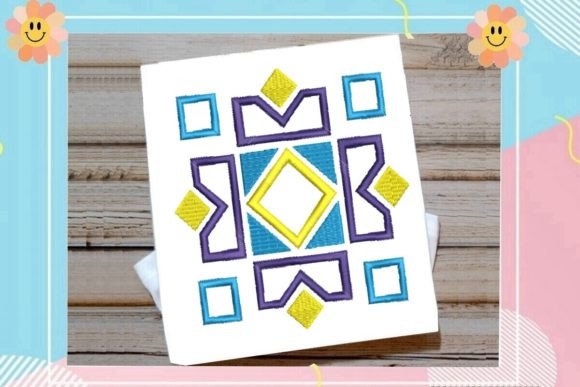
As an embroidery designer who’s stitched everything from delicate baby onesies to bold boutique sweatshirts, my first impression of Moroccan Geometric Embroidery Delight 4 was immediate: this isn’t just another repeat pattern—it carries the quiet confidence of authentic Zellige art. The design balances symmetry with subtle variation—interlocking stars, layered polygons, and rhythmic borders that feel intentional, not algorithmic. Visually, it reads as both modern and timeless, making it ideal for handmade products where customers seek craftsmanship over cliché. Its stitch personality leans toward clean satin and controlled fill stitches, with minimal running stitch accents—no excessive underlay or filler noise. That means less bulk on lightweight fabrics and better drape on apparel.
Real-World Fit: Where This Design Naturally Shines
Moroccan Geometric Embroidery Delight 4 doesn’t shout—it invites. I tested it across several real project types before committing to a client order: a linen kitchen towel, a cotton-blend tote bag, and a structured twill apron. On all three, the geometry held its integrity without distortion. It especially elevated items meant for gifting or display—think pillow covers for a boho nursery, baby blankets with tonal thread, or embroidered patches sewn onto denim jackets. Because the motif is inherently modular, it scales gracefully: small enough for a cap front (with careful hoop placement), bold enough for a full-back sweatshirt layout when mirrored or repeated thoughtfully.
Performance Across Fabric Types & Use Cases
- Custom apparel: Works well on mid-weight cottons and stable knits—but avoid ultra-stretchy jersey without cutaway stabilizer and reduced stitch density. Test first on scrap fabric with your exact garment type.
- Tote bags & aprons: Excellent clarity here. The balanced stitch density prevents puckering on canvas or duck cloth, and the geometric lines read sharply even at 3–4 inches wide.
- Baby items & kitchen towels: Clean edges and no dense thread buildup mean safer, softer finishes—critical for items that go near skin or get frequent washing. I recommend high-quality polyester thread for durability.
- Caps & curved surfaces: Smaller versions of the motif (not the full layout) translate best. Avoid placing intricate intersections directly over seams or crowns unless you’ve verified hoop clearance and digitizing flow.
- Patches & layered projects: While not an applique design, its defined borders make it highly adaptable for iron-on or sewn-on patch formats—just ensure your backing stabilizer supports clean cut edges.
What This Design Adds to Your Handmade Product
Using Moroccan Geometric Embroidery Delight 4 goes beyond decoration—it quietly upgrades perceived value. Customers notice thoughtful details: crisp angles, consistent spacing, and rhythm in repetition. That builds trust, especially for Etsy sellers or craft fair shoppers comparing handmade versus mass-produced goods. For brand consistency, it pairs beautifully with neutral palettes and natural textiles—no clashing with logo embroidery or product photography backdrops. And because it’s rooted in cultural artistry (not trend-chasing), it enhances giftability: buyers feel they’re giving something meaningful, not just decorative.
Practical Notes Every Designer Should Check
Before stitching Moroccan Geometric Embroidery Delight 4 into a finished product, do these five things:
- Run a test on scrap fabric matching your final substrate—especially if using dark fabric. Some geometric fills can look muddy with low-contrast thread; adjust colors or add a white underlay layer if needed.
- Verify hoop size compatibility. Even though it’s labeled a Freebie, file dimensions vary. Measure the widest point in your editing software and compare to your machine’s maximum hoop capacity.
- Review stitch density in tight zones—like star centers or intersecting lines. Overly dense areas may cause thread breaks or fabric distortion on lightweight materials.
- Choose stabilizer intentionally: tear-away for stable wovens, cutaway for knits or stretchy blends, and water-soluble for delicate layers like voile or napkin hems.
- Inspect small details post-stitch. Tiny points or narrow bridges in the geometry should be fully formed—not frayed or skipped. If they’re inconsistent, check tension and needle size (75/11 works well for most cottons).
Licensing & Commercial Use: A Quiet but Critical Step
This is a Creative Fabrica embroidery design in the Freebies category—and while “free” sounds simple, commercial use always hinges on the license terms attached to Moroccan Geometric Embroidery Delight 4 specifically. Before listing embroidered tote bags or selling personalized gifts featuring this motif, go directly to the product page on Creative Fabrica and confirm whether the license permits unlimited finished product sales, digital resale, or print-on-demand integration. Don’t rely on category assumptions—design assets change, and permissions are tied to individual listings.
Final Thought: Less Is More—When the Geometry Is Right
Moroccan Geometric Embroidery Delight 4 earns its place in my working library not because it’s flashy, but because it’s reliable. It behaves predictably across machines, respects fabric integrity, and delivers visual sophistication without overcomplication. For creative entrepreneurs building cohesive collections—or anyone stitching with intention—it’s a quiet upgrade: one that supports your craft instead of competing with it. Whether you’re designing for seasonal handmade gifts, boutique merchandise, or printable mockups to showcase on social media, this embroidery file adds polish without pretense. Just remember: every great design starts with a test stitch, not a sale.